
About us
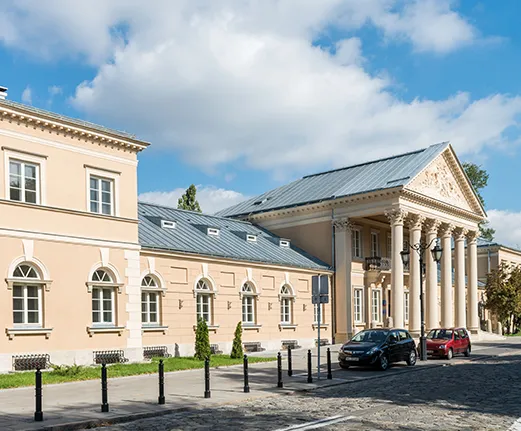
The Faculty of Journalism, Information and Book Studies at the University of Warsaw (FJIBS UW) is the first and only scientific institution in Poland which research and educational activities focus on three spheres that define contemporary human communication: media studies, information science, and bibliology.
Our Faculty was established by merging the Institute of Journalism (part of the Faculty of Journalism and Political Science) with the Institute of Information Science and Bibliological Studies (part of the Faculty of History). Both institutes had long-standing traditions of excellence and were consistently ranked among the top in their fields in Poland - a reputation confirmed by research results and rankings conducted by accreditation committees and the country's most influential media. The strategic union under the name of Faculty of Journalism, Information, and Book studies gave rise to a new, forward-thinking academic entity designed to meet the challenges of the rapidly evolving landscape of media, communication, and information. These are, undoubtedly, the most dynamic domains of contemporary human activity, and we are proud to stand at the forefront of their exploration.
Within our Faculty, tradition meets innovation. We draw on decades of scholarly expertise while embracing the digital revolution, preparing the next generation of thinkers, researchers, and professionals who will shape the future of how the world communicates, informs, and connects.
Faculty authorities
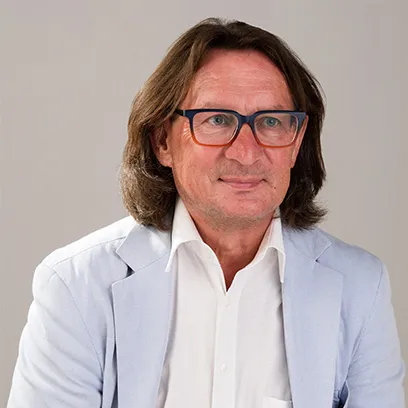
Professor Dariusz Kuźmina
Dean of the Faculty of Journalism, Information and Book Studies
E-mail: d.kuzmina@uw.edu.pl
Address: Nowy Świat 69, 00-046 Warszawa, room 39
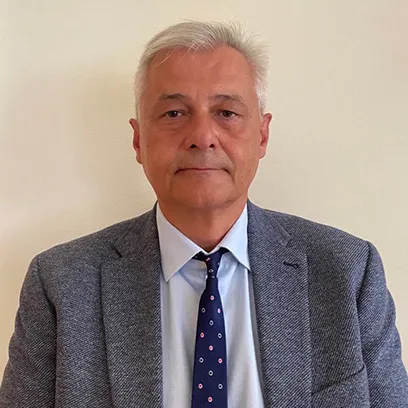
Professor Jacek Puchalski, PhD
Deputy Dean for Financial Affairs
E-mail: j.puchalski@uw.edu.pl
Address: Nowy Świat 69, 00-927 Warszawa, room 321
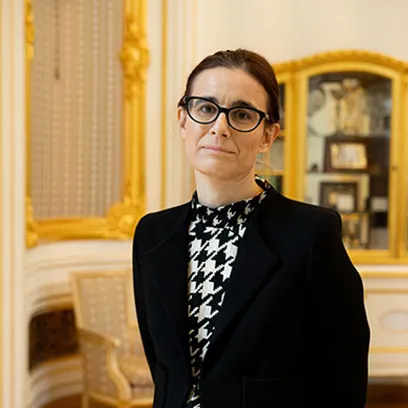
Professor Maria Łoszewska-Ołowska, PhD
Head of Didactic Unit
Deputy Dean for Students Affairs
E-mail: m.olowska@uw.edu.pl
Address: Dobra 55, Room 0.100
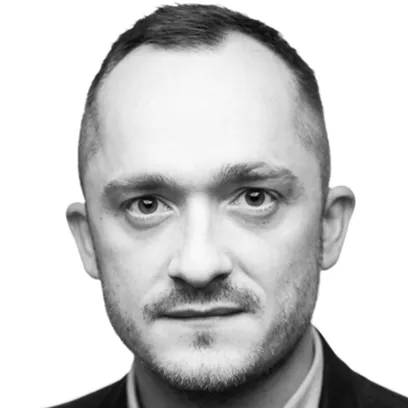
Professor Michał Głowacki, PhD
Deputy Dean for Research and International Collaboration
E-mail: michal.glowacki@uw.edu.pl
Address: Nowy Świat 69, 00-046 Warszawa, Room 37
FJIBS UW Contact Information
Faculty of Journalism, Information and Book Studies, University of Warsaw
Address: Nowy Świat 69, 00-046 Warsaw, Room 39 (4th floor)
Phone: +48 22 55 20 294, +48 22 55 23 915
E-mail: wdib@uw.edu.pl
Social Communication and Media Studies - Integration of Research Areas
The discipline of Social Communication and Media Studies, established by the regulation of the Polish Ministry of Science and Higher Education (MNiSW) on September 20, 2018, resulted from the merging of three previously existing disciplines in different fields (humanities and social sciences): media studies, bibliology and information science as well as cognitive science and social communication studies. At the University of Warsaw, among those declaring affiliation with the new discipline, there were only representatives of the first two, now considered subdisciplines: media studies as well as bibliology and information science. The vast majority of researchers were and still are employed at the Faculty of Journalism, Information and Book Studies (FJIBS).
The main scientific goal of FJIBS UW is to harness the synergetic effect created by the related research areas of the subdisciplines. Similar fields and research methods provide a solid foundation for conducting interdisciplinary studies.
Therefore, our focus is on both studying the media and the multifaceted processes of communication, as well as on the theory and methodology of information activities (collecting, processing, and disseminating data, news, and information from various fields of knowledge) and on the study of the book in all aspects of its functions (as a material object and a social tool of culture).
The latest publishing achievements of FJIBS staff can be traced on their profiles. Other research activities are characterized in the subsequent sections of this page.
Special attention should be given to the industrial and international activities of the staff who are dedicated to conducting research in this discipline at the University of Warsaw, working in international research teams, participating in prestigious conferences and congresses within the discipline, and collaborating with researchers from foreign institutions.
Research at FJIBS
At the Faculty of Journalism, Information and Book Studies, research is more than just inquiry - it’s a dynamic pursuit of knowledge at the crossroads of media, information, and communication.
Our academic staff conducts scientific research across two key sub-disciplines: information science and book studies (bibliology), as well as media studies. Once rooted in separate academic domains - the humanities and the social sciences - since 2018, these areas have been unified under the evolving discipline of social communication and media studies, which belongs to the broader field of social sciences.
This fusion of perspectives has opened new frontiers for research. Within this framework, we undertake both highly specialized and deeply interdisciplinary research projects. Our work spans traditional scholarly methods and innovative digital approaches, reflecting the complex nature of contemporary communication ecosystems.
What sets our research apart is the synergy between our diverse expertise, practical know-how, and state-of-the-art research infrastructure. We don’t just study communication - we engage with it, shape it, and challenge its boundaries.
At FJIBS, we explore how media and information shape societies, influence behavior, preserve knowledge, and transform public discourse. In a world overwhelmed by data and driven by storytelling, our research offers clarity, critical insight, and real-world impact.

Research infrastructure
In our structure, we have the University of Warsaw Media Analysis Centre, which consists of:
- Laboratory of Media Studies - https://www.lbm.uw.edu.pl/en/
- Laboratory of Television and Film Studies - https://www.lbtif.uw.edu.pl/
- Algorithmic Communication Laboratory - https://lka.wdib.uw.edu.pl/
Faculty Journals
- „Przegląd Biblioteczny” [The Library Review] - https://ojs.sbp.pl/index.php/pb
- „Przegląd Prawa Publicznego” [Public Law Review] - https://przegladprawapublicznego.wdib.uw.edu.pl/
- „Studia Medioznawcze” [Media Studies] - https://studiamedioznawcze.eu/index.php/studiamedioznawcze
- „Zagadnienia Informacji Naukowej - Studia Informacyjne” [Journal of Information Science - Information Studies] - https://ojs.sbp.pl/index.php/zin
- „Z Badań nad Książką i Księgozbiorami Historycznymi” [Studies on the History of the Book and Book Collections] - https://bookhistory.uw.edu.pl/index.php/zbadannadksiazka
Research Support and International Cooperation Section - contact information
We provide assistance with research project development, grant applications (national and international), academic mobility, and international collaboration.
Professor Michał Głowacki, PhD
Deputy Dean for Research and International Collaboration
Nowy Świat 69, 00-046 Warsaw, Room 37 (4th floor)
e-mail: michal.glowacki@uw.edu.pl
Michał Zając, PhD
Mobility Coordinator
Nowy Świat 69, 00-046 Warsaw
e-mail: michal.zajac@uw.edu.pl
Magdalena Lesiak
Administrative Specialist
Nowy Świat 69, 00-046 Warsaw, Room 37 (4th floor)
e-mail: badania.wdib@uw.edu.pl
phone: +48 (22) 55 20 237
Recent Research Projects

Euromedia Ownership Monitor 2025 (EurOMo 2025)
Funding Source: European Commission, Creative Europe, Action Grant CNECT/2024/4167000
Project Number: LC-03617323
Project Leader: Professor Michał Głowacki, PhD
Project Duration: 01.01.2025 - 31.12.2025
Granted Funding: €555,553.28, of which €17,707.68 is allocated to the University of Warsaw
Description: “Euromedia Ownership Monitor 2025” (EurOMo 2025) is a project aligned with the European Commission's goal of increasing transparency in media ownership and control over news media. Its core component is a searchable database of media owners from all 27 EU Member States. The project also offers other resources, such as country reports, risk assessments, and media literacy toolkits.
The project aims to update the existing databases and risk assessments developed as part of the pilot version of the Euromedia Ownership Monitor. It also seeks to expand the media database by including additional titles and channels, including accounts on Very Large Online Platforms (VLOP), which play a significant role in news consumption in various EU Member States. The project will provide policymakers and the general public with reliable data on the level of media ownership transparency across the European Union.
The EurOMo 2025 project is coordinated by Professor Josef Trappel and Tales Tomaz, PhD from Paris-Lodron University of Salzburg (PLUS) in Austria. The research team at the University of Warsaw includes Professor Katarzyna Gajlewicz-Korab, PhD and Dagmara Sidyk-Furman, M.A. Project partners (beneficiaries) include: University of Warsaw (Poland), Katholieke Universiteit Leuven (Belgium), Vrije Universiteit Brussel (Belgium), Media 21 Foundation (Bulgaria), Cyprus University of Technology (Cyprus), Endowment Fund for Independent Journalism (Czech Republic), Leibniz Institute for Media Research / Hans Bredow Institute (Germany), Roskilde University (Denmark), University of Tartu (Estonia), Universitat Pompeu Fabra (Spain), Tampere University (Finland), Université Paris-III / Sorbonne-Nouvelle (France), National and Kapodistrian University of Athens (Greece), University of Zagreb (Croatia), Dublin City University (Ireland), Sapienza University of Rome (Italy), Vilnius University (Lithuania), Luxembourg Institute of Socio-Economic Research (Luxembourg), Rīga Stradiņš University (Latvia), University of Malta (Malta), University of Minho (Portugal), Babeș-Bolyai University (Romania), University of Gothenburg (Sweden), MEMO’98 (Slovakia), University of Ljubljana (Slovenia).
More information:
Euromedia Ownership Monitor: https://media-ownership.eu
Activity: Gamification of Worlds in Service of the Modern 21st-Century Society – Exchange Platform Implemented under: POB V: In Search of Regional Solutions for Global Challenges
Funding Source: Ministry of Science and Higher Education (Poland)
Project Leader: Professor Tomasz Gackowski, PhD
Project Duration: 2020-2026
Granted Funding: 3,390,000 PLN
Description: The objective of this initiative is to stimulate advanced research at the University of Warsaw - both conceptually and technologically (through the use of modern biometric research equipment) - in the areas of e-sports, gaming, and VR/AR experiences. Recent meta-analyses based on WoS/Scopus data show that the most rapidly growing areas of academic interest in the coming years will be games, e-sports, and virtual and augmented reality. With access to state-of-the-art technology and strong international networks, the University of Warsaw has the potential to become a leading research center in these fields. Collaboration between researchers from various academic disciplines in Poland and abroad will enhance the University's international visibility, especially in top-tier scientific journals and at major ICT-related conferences. The proposed actions will significantly expand and reinforce research already initiated at the University of Warsaw (e.g., by the Media Research Laboratory) on gaming, gamers, and immersive experiences in virtual environments, particularly in educational contexts.
A core component of this initiative will be the creation of a virtual platform - a network of researchers and research centers focused on e-sports, digital games, and AR/VR experiences. This platform aims to achieve international recognition primarily through joint publications in prestigious journals and monographs, as well as through participation in or organization of renowned academic conferences. The goal is to position the University of Warsaw as a virtual hub that brings together researchers from a variety of disciplines and countries, particularly those studying gaming and VR/AR experiences. This platform would not merely serve as a tool for virtual meetings; it would be a shared space for exchanging databases, biometric experimental results, and collaborative analysis. This collaborative environment would support the development of joint international grant applications and the production of high-impact, internationally recognized scholarly publications.
The coordination of the platform will be handled by the Media Research Laboratory at the University of Warsaw, a unit that combines the necessary technical infrastructure with proven research expertise in the analysis of games, e-sports, VR/AR, and media discourse and narratives.
Research team members: Professor Tomasz Gackowski, PhD; Professor Anna Mierzecka, PhD; Karolina Brylska, PhD; Adam Balcerzak, M.Sc.; Marcin Łączyński, M.A.; Marlena Sztyber, M.A.

Maintenance of the Integrated Research Infrastructure for Media Studies Behavioral Research at the LBM UW
Funding Source: Ministry of Science and Higher Education (formerly Ministry of Education and Science, Poland)
Project Leader: Professor Tomasz Gackowski, PhD
Project Duration: 2023-2025
Granted Funding: 2,673,268.80 PLN
Description: The objective of this initiative is to maintain, measure, and modernize an advanced system for conducting multifaceted media research. The research carried out at the Laboratory of Media Studies (LBM) operates at the intersection of several disciplines, including media and communication studies, sociology, ethnography, cultural studies, political science, cognitive science, psychology, as well as computer science, neurobiology, and mathematics. The system is comprised not only of a focus group facility (FGI) and a CATI studio (with 15 computer workstations for conducting surveys, an in-house RDD system, and data weighting methodology aligned with national census and Central Statistical Office standards), but also technology for continuous SD and HD recording of 9 television news channels and 6 radio stations. It also includes algorithms and software for automatic and semi-automatic online content monitoring (based on keyword analysis, collocations, concordances—web crawling), as well as sophisticated equipment for interdisciplinary biometric research. This biometric toolkit enables studies using devices for measuring electrodermal activity (EDA/GSR), muscle tension (EMG), electrocardiography (ECG), brain bioelectrical activity (EEG), and facial microexpressions (face tracking via Affectiva). The awarded funding will support the continued use of this infrastructure in experiments and studies conducted by the Laboratory of Media Studies at the University of Warsaw.
Research team members: Professor Tomasz Gackowski, PhD; Professor Anna Mierzecka, PhD; Karolina Brylska, PhD; Associate Professor Jacek Wasilewski; Adam Balcerzak, M.Sc.; Marcin Łączyński, M.A.
REVIVING, BOOSTING, OPTIMISING AND TRANSFORMING EUROPEAN FILM COMPETITIVENESS (REBOOT)
Funding Source: European Commission, Horizon Europe
Project Number: 101094796
Project Leader: Professor Michał Głowacki, PhD
Project Duration: 2023-2026
Granted Funding: €156,433.75
Description: REBOOT is an international research project focused on enhancing the competitiveness of the European Film Industry (EFI). The study aims to explore the dynamics of competitiveness within European cultural policy and to provide recommendations to European institutions concerning cultural diversity in the EFI, with a special focus on gender equality, inclusivity, and the promotion of European cinema.
The project seeks to examine both the strengths and challenges of European competitiveness and policies supporting the EFI. This includes identifying ways to measure, analyze, and evaluate the impact of policies on the strategies of stakeholders within the film industry. Additionally, the project aspires to actively contribute to discussions on the future of the EFI by investigating Generation Z’s viewing preferences, as well as evolving methods of film production and distribution in Europe. The outcomes of REBOOT address the concept of EFI competitiveness in several key areas:
1. Enhancing support for young people's engagement with European cinema;
2. Strengthening the EU’s position in the global audiovisual economy, especially in the context of Video on Demand (VOD) developments;
3. Supporting cultural diversity within the EU’s film industry;
4. Emphasizing the need for a new understanding of competitiveness in the age of digital platforms and emerging technologies;
5. Recognizing and promoting the strategic value of film, culture, and the creative sector as geopolitical assets for the EU.
REBOOT brings together interdisciplinary research centers from 10 countries across Europe: Austria, Belgium, Finland, France, Greece, Spain, the Netherlands, Poland, Turkey, and Italy. The project is coordinated by Professor Katharine Sarikakis from the University of Vienna. The University of Warsaw research team includes Associate Professor Alicja Waszkiewicz-Raviv, PhD; Jacek Mikucki, PhD; Anita Zawisza, PhD and Jan Manicki, M.A.
Project website: https://thereboot-project.eu
Public service media in the age of platforms
Funding Source: National Science Centre (NCN, Poland), CHANSE - Collaboration of Humanities and Social Sciences in Europe
Project Website: https://chanse.org/#
Project Number: UMO-2021/03/Y/HS2/00277
Project Leader: Professor Michał Głowacki, PhD
Project Duration: 2022-2025
Granted Funding: €1,335,910
Description: This international research project, “Public Service Media in the Platform Era”, is funded under the CHANSE programme - Collaboration of Humanities and Social Sciences in Europe. The project aims to examine the role and operations of public service media (PSM) in the context of platformization and data-driven communication. The study investigates PSM in six countries - Belgium, Denmark, Canada, Poland, the United Kingdom, and Italy - through legal and policy document analysis, content analysis, and in-depth interviews with PSM professionals. The goal is to identify similarities and differences in organizational transformation, programming diversity (including the voices of Generation Z, inclusivity, and representation), and broader societal contexts (such as media polarization, the erosion of Western democratic narratives, and strong political parallelism).
The project is coordinated by Professor Catherine Johnson from the University of
Huddersfield (UK). Participating institutions include: Vrije Universiteit Brussel (Belgium), Aarhus Universitet (Denmark), University of Alberta (Canada), Università Cattolica del Sacro Cuore (Italy) and Faculty of Journalism, Information and Book Studies, University of Warsaw (Poland).
The project is carried out in cooperation with the European Broadcasting Union (EBU) - www.ebu.ch and the European Platform of Regulatory Authorities (EPRA) - www.epra.org.
The research team at the University of Warsaw includes: Professor Katarzyna Gajlewicz-Korab, PhD, Jacek Mikucki, PhD, Filip Świtkowski, PhD.
More information:
https://chanse.org/psm-ap/
https://www.linkedin.com/company/psm-ap
EUROMEDIA OWNERSHIP MONITOR EU 12 (EurOMo 12)
Funding Source: European Commission, Horizon Europe
Project Number: LC-01901373
Project Leader: Professor Michał Głowacki, PhD
Project Duration: 2022-2023
Granted Funding: €50,825
Description: The goal of the EurOMo project is to conduct a systematic analysis of the level of media ownership pluralism and transparency in 12 European Union (EU) countries: Bulgaria, Croatia, Cyprus, Estonia, France, Ireland, Latvia, Luxembourg, Malta, Poland, Romania, and Slovakia. Following the methodology developed under the Euromedia Ownership Monitor, research teams collect and analyze information about media owners in each of the participating countries. The outcome will include country reports, as well as indices measuring transparency and the risk to media diversity both within individual EU Member States and across the Union as a whole. This one-year pilot study, EurOMo 12, continues the work previously conducted in the other 15 EU Member States. Together, the results provide a comprehensive foundation for discussion on the need to support media pluralism in European media policy.
The EurOMo 12 project is coordinated by Professor Josef Trappel from Paris-Lodron
University of Salzburg (PLUS), Austria. The research team at the University of Warsaw
includes: Professor Alicja Jaskiernia; Professor Katarzyna Gajlewicz-Korab, PhD; Professor Maria Łoszewska-Ołowska, PhD; Dagmara Sidyk-Furman, M.A. and Bartłomiej Wojnowski, M.A.
More information: https://media-ownership.eu
Documents and Materials on the History of the Polish Section of Radio Free Europe, Part II (Continuation), Volumes I–V plus 2
Funding Source: Ministry of Education and Science (Poland), National Programme for the Development of the Humanities - Module: National Heritage
Project Number: 0148/NPRH9/H11/88/2021
Project Leader: Professor Rafał Habielski
Project Duration: 2022-2027
Granted Funding: 1,135,383 PLN
Description: This project is a continuation of the initiative titled Documents and Materials on the History of the Polish Service of Radio Free Europe, 1952-1975, which was completed under the National Programme for the Development of the Humanities (NPRH) in 2019. The current project aims to prepare and publish five volumes of documents and correspondence, two volumes in the form of an almanac-style publication with diverse content, and a dedicated website focused on Radio Free Europe (RFE).
The materials included in all facets of the project illustrate the political and informational role of the Polish Service of RFE. They also provide evidence of the station’s importance in preserving national identity and heritage during the period of communist rule in Poland.
Digitization of the National Heritage Preserved in the Archive of the Polish Catholic Mission in Paris
Funding Source: Ministry of Education and Science (Poland), Science for Society programme
Project Number: NdS/529036/2021/2021
Project Leader: Professor Janusz W. Adamowski
Project Duration: 2022-2024
Granted Funding: 1,100,000 PLN
Description: Under the direction of the ministerial programme Humanities - Society - Identity, the project strives to support initiatives that promote innovative and interdisciplinary research in the humanities, foster patriotic attitudes, national and regional traditions, and explore the roots of Polish culture both in Poland and abroad.
A particular focus is placed on disseminating knowledge about Polish national heritage
created outside the country. As part of the project, digitized materials will be preserved and protected from deterioration—especially two historical newspapers: "Narodowiec" and "Głos Katolicki", which are in a poor physical state due to their early 20th-century publication origins and the fragility of the paper on which they were printed.
Stanisław Lisowski's participation in the work for the recovery and protection of Polish writing heritage
Funding Source: National Science Centre (NCN, Poland), MINIATURA 5 competition
Project Number: DEC-2021/05/X/HS2/01137
Project Leader: Dorota Pietrzkiewicz, PhD
Project Duration: 2022
Granted Funding: 6,886 PLN
Description: This project involves basic research, specifically theoretical work aimed at acquiring new knowledge about the contributions of S. Lisowski - a librarian and archivist-to the recovery of Polish written heritage (including valuable post-monastic incunabula and old prints) following the Treaty of Riga (1921), as well as his efforts in preserving written cultural heritage in the newly reestablished Republic of Poland.
The figure of S. Lisowski has not yet been the subject of in-depth scholarly inquiry; he does not even have a biographical entry on Wikipedia. To carry out the research, archival queries and bibliological studies will be conducted. Bibliological research - especially when analyzed through political and social lenses - enables a thorough and multi-dimensional understanding of the mechanisms associated with the “life of the book” and its cultural impact. The study will employ methodology appropriate to this type of research, including source analysis and critique.
Critical Exploration of Media Related Risks and Opportunities for Deliberative Communication: Development Scenarios of the European Media Landscape (MEDIADELCOM)
Funding Source: European Commission, HORIZON 2020 Programme
Project Number: 101004811
Project Leader: Professor Michał Głowacki, PhD
Project Duration: 01.03.2021 - 31.03.2024
Granted Funding: €88,875
Description: The project titled “Critical Exploration of Media Related Risks and Opportunities for Deliberative Communication: Development Scenarios of the European Media Landscape” (MEDIADELCOM) is being implemented in collaboration with 17 European research institutions (universities and NGOs) from 14 countries across Europe. The initiative was conceived and is coordinated by Professor Halliki Harro-Loit from the University of Tartu (Estonia).
The aim of the MEDIADELCOM study (2021-2024) is to identify risks and opportunities related to the media’s impact on social cohesion in Europe, and to outline possible development scenarios for the media landscape within the European Union. Using both quantitative and qualitative methods, the research teams will develop and test a diagnostic tool designed to assess the potential of media policy, public service media, digital literacy, and the use of metadata for fostering deliberative communication.
The results of the project will be disseminated through academic publications, as well as policy reports addressed to media stakeholders and policymakers at both the national and EU levels.
More information: https://www.mediadelcom.eu/
Critical Analysis of Risks and Opportunities for Media and Deliberative Communication: Development Scenarios of the European Media Landscape
Funding Source: Ministry of Education and Science (MEiN), "Premia na Horyzoncie 2"
Project Number: 509664 /PnH 2/2021
Project Leader: Professor Michał Głowacki, PhD
Duration: 2021-2024
Granted Funding: 79,751 PLN
Description: The rapid rise in popularity of populists and the far-right across European countries poses threats to European unity and the achievement of common goals and principles. It also hampers decision-making based on facts and reliable information. Therefore, protecting communication and open debate in the media is essential, and diverse arguments and opinions must be treated with respect and tolerance. However, before this can be realized, comprehensive research is necessary to examine the risks and opportunities related to the media and to develop forecasts of future threats. The team behind the EU-funded MEDIADELCOM project intends to develop a diagnostic tool for media professionals, educators, and institutions. This tool will enable appropriate assessments to ensure social cohesion and open media discourse in Europe. The proposed solution will facilitate modelling and managing multiple scenarios and instruments related to predicting media-related threats.
Diversity management as innovation in journalis (DMAI)
Funding Source: Norwegian Financial Mechanism, POLS competition
Project Number: 2020/37/K/HS2/03773
Project Leader: Greta Gober, PhD
Duration: 2021-2023
Granted Funding: 878,125 PLN
Description: The aim of this project is to understand how managing diversity as an innovation in journalism will function in practice. This is crucial for ensuring journalism remains a cornerstone of healthy democracies and open societies. The project examines how journalists’ work is managed and practiced in the era of digital and networked journalism to increase newsroom diversity in Sweden, Poland, and the United Kingdom. Although there are many differences (and some similarities) in the media models and policies of these countries, they represent very different cases regarding diversity management traditions. On one hand, the UK, due to its colonial legacy, has a diverse society and a long history of diversity management. Sweden is undergoing a transformation - from a homogeneous to a more heterogeneous society - due to immigration and refugee acceptance. Despite relatively limited experience in diversity management, Sweden still represents an open and liberal society. On the other hand, Poland remains largely a homogeneous country, recently appearing in international headlines due to refusal to comply with EU refugee quotas, women's protests defending reproductive rights, and local government resolutions declaring
themselves "LGBT-free zones."
More information is available on the project website:
https://managingnewsroomdiversity.com/
Grant for the maintenance of special research equipment (SPUB) Polish Diaspora Digital Library
Funding Source: Ministry of Science and Higher Education
Project Leader: Professor Dariusz Kuźmina
Duration: 2020-2022
Granted Funding: 540,000 PLN
Description: The Polish Diaspora Digital Library was established in 2012 at the University of Warsaw as a modern communication tool to foster international cooperation among researchers outside Poland who focus on topics related to the Polish diaspora or emigration. Another important area of the Digital Library’s activity is the preservation of Polish collections located abroad. Many archives do not adequately protect Polish materials, prioritizing conservation efforts on collections from their own cultural circles. The Polish Diaspora Digital Library is a unique tool for accessing digital resources. It holds nearly 13,000 titles and specializes in digitizing and disseminating Polish diaspora press, archival documents, and books related to the activities of Poles abroad within the scholarly community. On average, it is used by about 8,000 readers monthly. It is an essential resource for historians of the press, both scholars and students, who use its collections to write master’s theses and doctoral dissertations.
Protecting the kingdom with Tibetan manuscripts: codicological and historical analyses of the royal Drangsong collection from Mustang, Nepal (DRONG)
Funding Source: National Science Centre, HARMONIA 10 competition
Project Number: UMO-2018/30/M/HS3/00372
Project Leader: Associate Professor Agnieszka Ilona Helman-Ważny, PhD
Duration: 2019-2023
Granted Funding: 975,226 PLN
Description: The project will study the Drangsong collection by combining research methods that address both formal and functional features of the manuscripts. Each manuscript will be examined from three perspectives. First, as an artifact: the final product of cultural, artistic, and literary activity in a specific region; second, as support for culturally significant texts, which, combined with other texts, can contribute to expanding our knowledge of the little-understood areas of the Bön religion, including its relation to political power; and third, to what extent the book functioned as a sacred object and repository of liturgical narratives and instructions, serving as an essential component of a living, though endangered, tradition of liturgical ritual.
